A whole home solar system from SolarSet is built to carry a household’s everyday electrical load, from lighting and kitchen appliances to laundry, heating and cooling, when it is sized to that home. Every system is assembled, wired and tested at our factory in Center, Colorado, then delivered as one ground-mount unit in an off-grid, hybrid or grid-tie configuration. Nothing goes on the roof and nothing has to be assembled on site. Whether the property sits beyond the power lines or has utility service and needs battery backup, the system arrives ready to set in place, connect and start powering your home.
Whole Home Solar System Options for Homes On and Off the Grid
Off-Grid, Hybrid or Grid-Tie
Run the house with no utility connection, stay connected and keep batteries for outages, or tie into the grid without batteries. The right configuration depends on where the home is and what it needs when the grid goes down.
On the Ground, Not the Roof
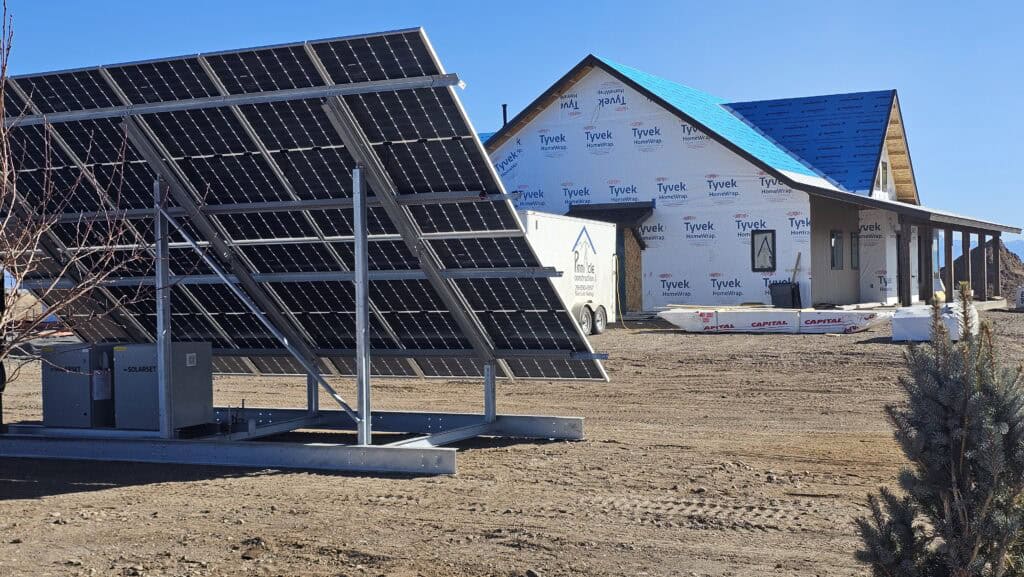
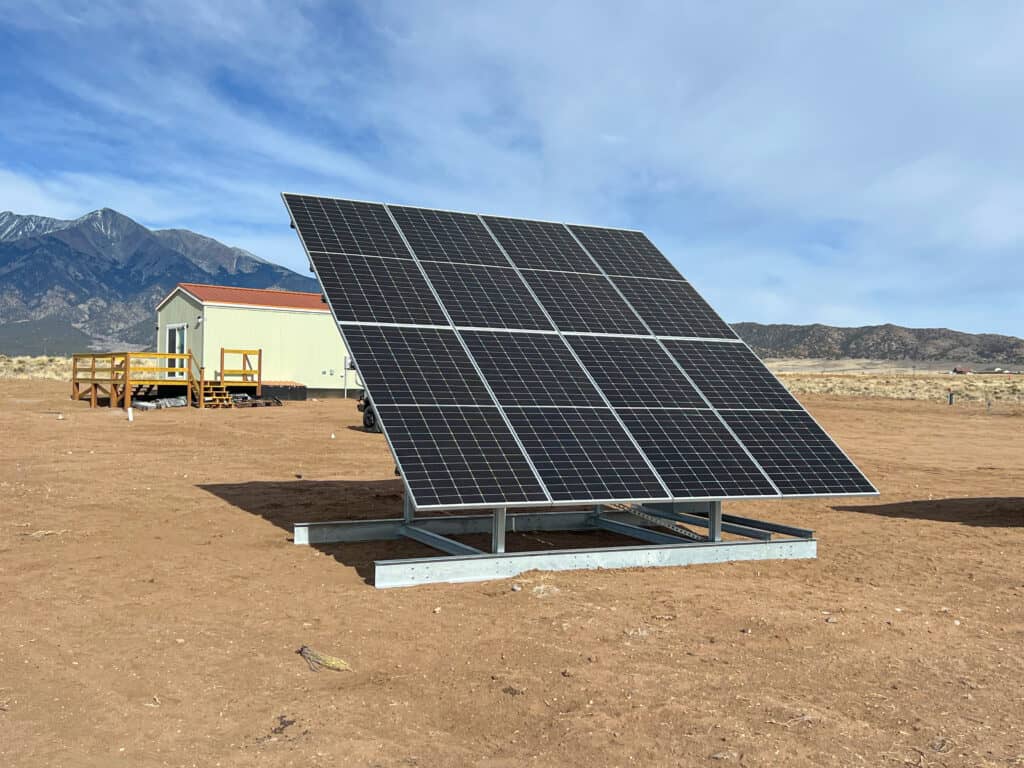
Every SolarSet system is a ground-mount system. There are no roof penetrations, and the array is not limited by roof size, pitch or shading, so it can face the sun from the sunniest open spot on the property.
Factory Built
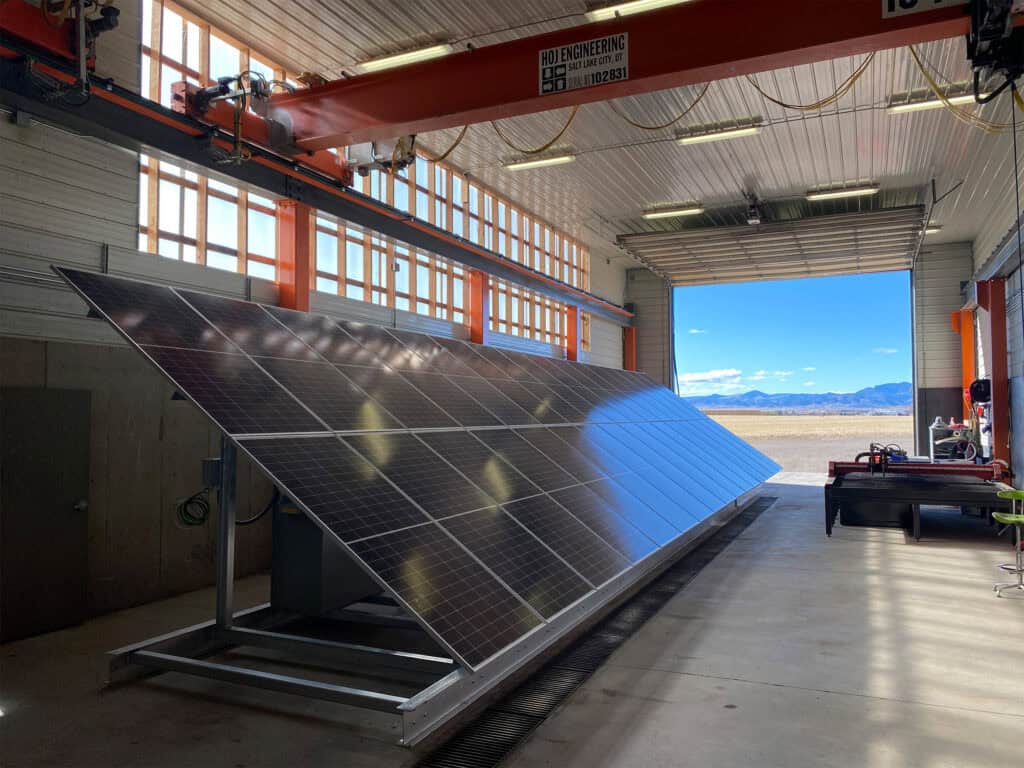
Panels, inverter, charge control and, where the configuration includes it, battery storage are assembled, wired and tested at our Colorado factory. The system arrives mounted on a steel frame, so there is nothing to piece together at your home.
What a Whole House Solar System Has to Do
A whole house solar system carries more than a few lights or a single outbuilding. It has to supply the circuits a household depends on through the day, overnight and through stretches of cloudy weather. That takes three things. The panels must produce what the home uses, the inverter must handle the largest loads running at the same time, and off-grid and hybrid homes need enough battery storage to carry the house when the sun is down.
Start with Your Home's Energy Usage
Sizing any solar power system for home use starts with the load. List what has to run, from the refrigerator and furnace fan to the washer and dryer, along with what each item draws and how many hours a day it runs. Together those numbers show the home’s daily energy usage. Large loads such as electric heat, central air conditioning and EV charging raise the size of system required, so they belong at the top of the list. For an off-grid home, the last question is how many days the house must run without sun. Our sizing walkthrough explains the calculation, or send us the list and we will work through it with you.
Battery Storage and Stored Energy
Solar panels only produce power while the sun is up, so in whole house solar power systems, battery storage is what lets a home keep running after dark. In an off-grid system, the battery bank charges during the day and supplies the house overnight and through cloudy days. Its capacity is sized against the hours and days the home must run on stored energy. In a hybrid system, the batteries provide battery backup: when the utility drops out, the home keeps running on stored energy and solar power instead of going dark. A grid-tie system has no batteries and relies on the utility at night.
Choosing a Configuration
The right setup depends on whether the home has utility service and what has to keep running during an outage.
Off-Grid
An Off-Grid system has no utility connection and runs the home on its own. It is the setup for houses the power lines do not reach, or where bringing in a line would be impractical. As an off grid home solar system, it supplies whole home solar power every day, which is why battery capacity and days without sun carry the most weight in its sizing.
Hybrid
A Hybrid system stays connected to the utility and keeps its own battery storage, which makes it a whole house solar system with battery backup. When the grid goes down, the home keeps running. Hybrid inverters are offered with 50 A, 100 A or 200 A pass-through, which sets how much of the house runs through the system during an outage, from essential circuits up to a full household service.
Grid-Tie
A Grid-Tie system connects to the utility without batteries. It produces power during the day while the utility covers the rest. For safety, a grid-tie system shuts down when the utility goes out, so a home that needs power through outages should look at Hybrid instead.
Why Factory-Built Matters
Most solar panel kits ship as boxes of parts: panels, racking, inverter, batteries and wire that someone still has to mount, connect and test on site. A SolarSet residential solar power system is assembled, wired and tested before it leaves the factory, so it arrives as one engineered unit on a steel ground-mount frame. That moves the assembly work from your property to a controlled factory floor, and each system is tested as a whole before it ships. Every model has its own data sheet on the Off-Grid, Hybrid and Grid-Tie pages, and you can compare our full lineup of complete solar power systems on the products page.
Where a Whole Home Solar System Fits
Our whole home solar systems serve houses in a range of situations, including:
Full-time homes beyond the reach of the power lines
Rural properties where a utility line extension would be expensive or slow
Grid-connected homes that need to keep running through outages
Homes with a roof that is not suited to panels, or owners who would rather keep solar on the ground
New homes being planned or built, where the power system can be planned alongside the house
Homes at high altitude or in harsh weather, where a durable steel frame matters
Seasonal homes and cabins can use the same systems, sized to how they are used.
Delivery and What Happens When It Arrives
Delivery is free and curbside within 300 road miles of our factory for any home solar power system we build, and systems ship anywhere in North America beyond that. Curbside assumes a usable driveway or lot connected to a well-maintained public road, with you or a representative there to accept the system. Setting the unit in place and anchoring it are separate services, offered in select areas only and priced case by case. Elsewhere, your own contractor handles placement. Once the system is set and anchored, it is ready to be connected to the home.
Common Questions
Can a solar system run a whole home?
Yes, when it is sized to the home’s loads. The panels need to cover the household’s daily energy usage, and the inverter has to handle the largest loads running at once. Off-grid and hybrid homes also need enough battery storage for nights and cloudy days.
How big does a whole home solar system need to be?
It depends on what the house runs. Start with a list of appliances, what each one draws and how long it runs each day. Electric heat, central air conditioning and EV charging push the size up, while propane or wood heat brings it down.
Will a whole home solar system keep my house running in an outage?
An off-grid system is not connected to the utility, so outages do not affect it. A hybrid system switches to its batteries and solar power when the grid goes down. A grid-tie system shuts down during an outage for safety.
Do the panels go on my roof?
No. Every SolarSet system is a ground-mount system that arrives on its own steel frame, so there are no roof penetrations and the roof does not limit the size of the array.
What arrives on delivery day?
One assembled unit: panels, inverter, charge control and, where the configuration includes it, battery storage, already wired and tested. There are no boxes of loose parts to sort through.
Talk to Us About Your Home
Send us the property location, a list of what the house needs to run and whether the home has utility service. We will tell you which configuration fits, what size of whole home solar power system the loads call for and what delivery involves. Contact us today to get started.
Document limit reached. You've reached your maximum limit of 7 viewed documents. Please contact SolarSet for more information.
View this document
What these icons mean:
Small House/Cabin
Large Homes
Small Campers
Large Campers
RV’s
Small Construction Sites
Large Construction Sites
Telecommunications
Agricultural Operations
Well Pumps
FREE CURBSIDE DELIVERY WITHIN 300 ROAD MILES FROM OUR FACTORY
This service assumes delivery is made on an easily accessible driveway or parking lot directly connected to a well-maintained public road. Setting the unit in place and anchoring the system are additional services, available in select locations only, and will be priced on a case-by-case basis.
If unit is to be unloaded on public property, formal proof of permission from the Authority Having Jurisdiction is needed prior to arrival.
The buyer, or a representative of the buyer, must be on-site to accept the system.
*Limitations Apply
Contact us for more information
719-759-5100 sales@solarset.com 46920 County Road E. Center, CO. 81125